When Prince Vladimir of Kyiv decided in 988 to convert his people to Christianity, he had to deal with the gods he had set up himself eight years earlier. According to the chronicle, he had the great wooden statue of Perun, the thunder god, with its silver head and golden mustache, tied to a horse’s tail, dragged down the hill, beaten with sticks by twelve men and thrown into the Dnieper river. Along the bank, people wept. For a while, the statue floated, and men were told to push it off with poles until it went over the rapids.
It is one of the most vivid scenes in Slavic history, and it is also close to the only description we have of what the old religion looked like in action. That fact is, in miniature, the problem with Slavic mythology.
The gap in the record
The Slavs spread across a vast area of central and eastern Europe in the sixth and seventh centuries, and they stayed pagan until relatively late, between the ninth and twelfth centuries, depending on the region. They had no writing before Christianity, so the earliest records we have of their beliefs come from foreign observers, nearly all of them hostile.
There are a few scraps. The Byzantine historian Procopius, writing around 550, said that the Slavs believed in one god, the maker of lightning, to whom they sacrificed oxen, and that they also worshiped rivers and nymphs. The German chronicler Helmold of Bosau, in the twelfth century, described the western Slavs on the Baltic coast and their god Svantevit. His temple at Arkona, on the island of Rügen, was destroyed by a Danish king in 1168. The idol was cut down and dragged away.
The longest passage is the Primary Chronicle, compiled in Kyiv in the twelfth century, which reports that in 980, Vladimir set up idols on a hill: Perun, Khors, Dazhbog, Stribog, Simargl and Mokosh. Six names. That list, which is the best evidence we have for the East Slavic pantheon, has been argued over for two hundred years.
Folklore as evidence
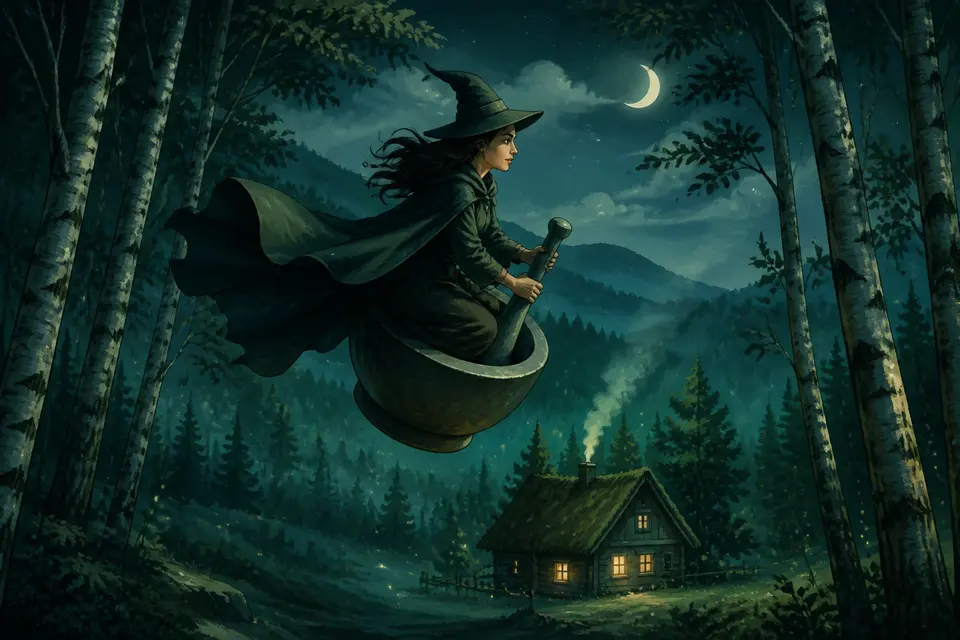
The other main source is folklore: what peasants, in villages across Russia, Ukraine, Poland, Serbia and elsewhere, told collectors in the eighteenth and nineteenth centuries. It is a rich collection. It includes house spirits such as the domovoi, forest spirits such as the leshy, water spirits such as the vodyanoy and the rusalka, witches like Baba Yaga and heroes called bogatyrs. Many of these figures survived through a period historians call dvoeverie, “double faith,” in which people were Christian but continued to leave milk for the house spirit.
The trouble is that folklore is slippery. Beliefs change over time, and a nineteenth-century story may reflect a very different world from one told in the year 900. Scholars working in this field compare them with other Indo-European traditions, especially Baltic, Norse and Vedic, to try to reconstruct what the older beliefs may have been. The most famous example is the idea that Perun, the thunder god, is related to Thor, Zeus and the Lithuanian Perkūnas, based on the name and the function. That is reasonable, but it is still reconstruction.
The fake book
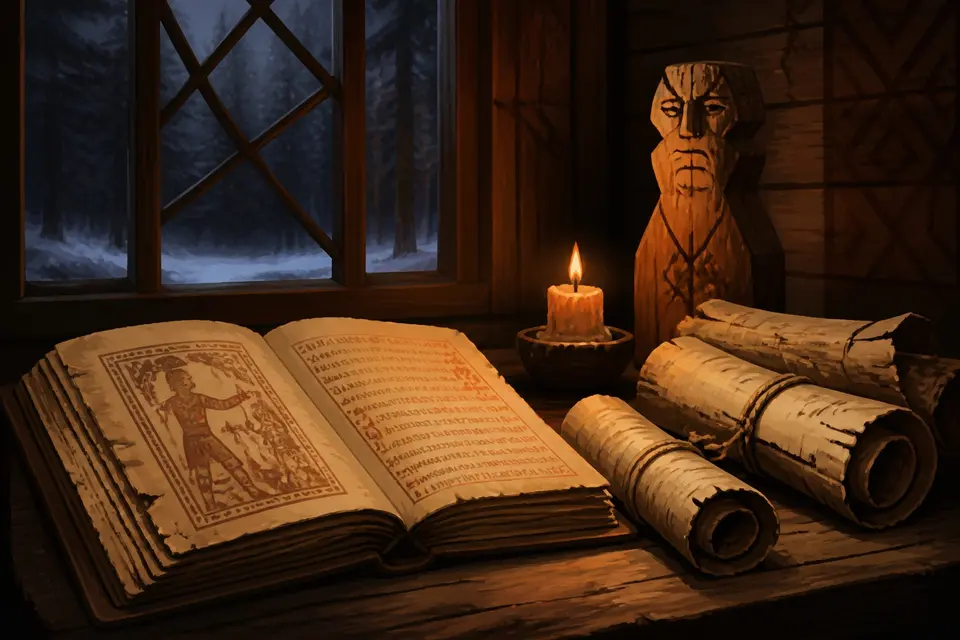
There is a cautionary tale. In the 1950s, a Russian émigré in California named Yuri Mirolyubov published a text called the Book of Veles, or Vlesova Kniga. He said he had copied it from wooden tablets found in 1919 by a Russian officer. It contained an epic history of the Slavs going back thousands of years, with prayers to gods and genealogies of tribes. It was a sensation among Slavic nationalists. Linguists soon pointed out that the language was an invented mix of Slavic dialects, with mistakes no medieval scribe would make. The tablets themselves were conveniently lost. It is now widely considered a forgery. It remains popular among some neopagans.
Why there is no neat pantheon
The idea of a tidy, Olympian-style set of gods is largely modern. The Slavs were not one nation. They were many tribes, with their own local gods, whose names, as far as we can tell, changed from region to region. The god you call Svantevit in the Baltic might have a different name and role in Bohemia. A figure who was important in one place may be absent in another. The six idols of Kyiv were an official choice by a particular ruler, perhaps assembled for political reasons. They are not a catalog of Slavic belief.
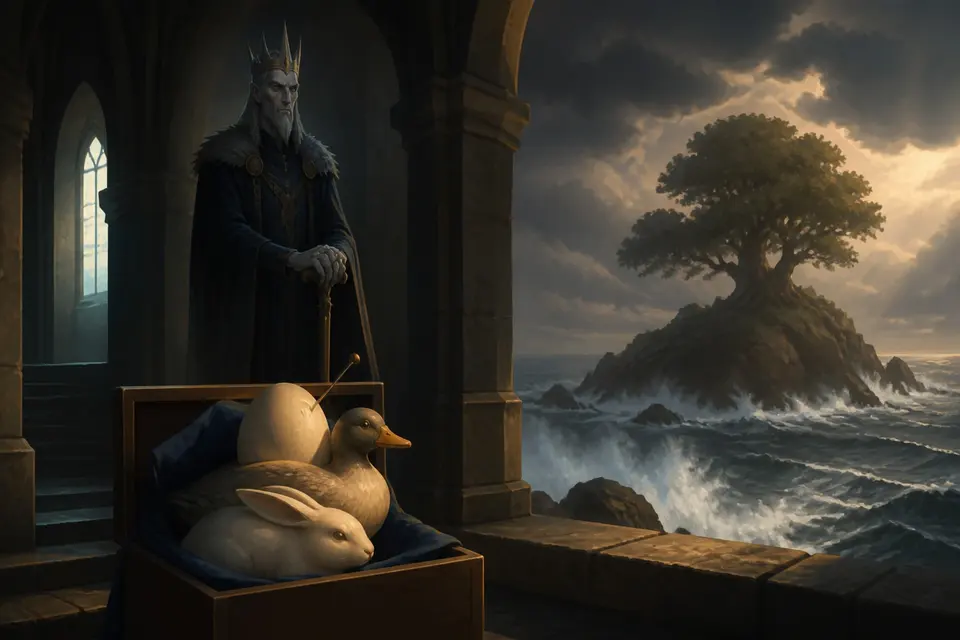
That is why serious modern scholars are careful to speak of the “beliefs” of Slavic peoples, not “the” Slavic religion. Even the reconstructions of well-known figures are cautious. Veles is often described as the god of cattle, magic and the underworld, the opponent of Perun in a story in which the thunder god strikes a serpent who has stolen the cattle. This is a reconstruction based on later folklore, parallels and a few clues, not a text that survives.
A revival, and a fashion
Since the 1990s, there has been a revival of Slavic paganism, called Rodnovery in Russia and by other names elsewhere, with groups holding ceremonies and seasonal festivals. Authors and game designers have also drawn on Slavic lore, including the Polish writer Andrzej Sapkowski and the game studio CD Projekt Red, whose Witcher games feature the leshy and other creatures from folklore. For many people in Eastern Europe, the old stories are a way of reconnecting with their own past.
What the gaps give us
It is tempting to call this a weakness. But the gaps in the record are also what make Slavic myth feel alive. It is a tradition that was never fixed in a book, and survives in stories told in kitchens, in the shapes of embroidered cloths, in holiday customs and in phrases that people use without thinking. To study it, you have to be patient, to read widely and to be comfortable with not knowing.
That is not a bad way to approach any mythology. The Vladimir story is a good place to start: a prince tying a god to a horse’s tail, and people standing on the bank, crying.