In 1989, a California brewery called Anchor Brewing made a limited batch of beer that had no real precedent. It was brewed following a recipe that was nearly 4,000 years old, from a Sumerian hymn to the goddess of beer, and the project was advised by an Assyriologist at the University of Chicago named Miguel Civil. They called it Ninkasi. As far as anyone knows, it was the first time that a beer had been made from the instructions in a prayer.
The goddess
Ninkasi was the Sumerian goddess of beer. Her name means something like “the lady who fills the mouth.” She was born, according to one myth, from sparkling fresh water, and she was “the one who satisfies the heart.” Beer, in Sumer, was not just a drink. It was a staple of life, a source of calories and, probably, a safer drink than river water. It was also woven into religion, in offerings to the gods and in celebration.
The hymn
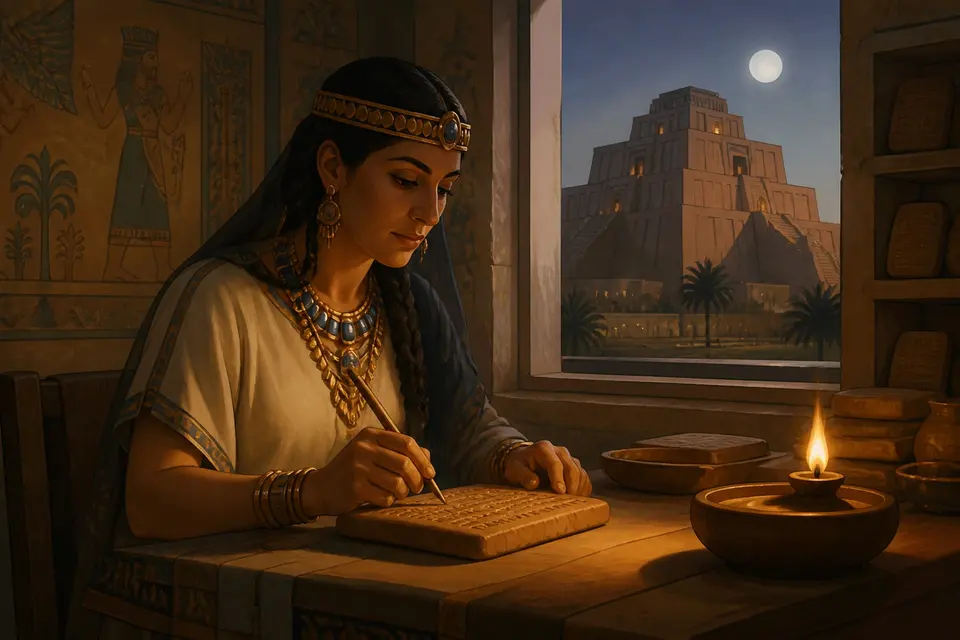
The Hymn to Ninkasi is a poem of about 70 lines, composed around 1800 BCE, preserved on a clay tablet. On the surface, it is a prayer in praise of the goddess. But the verses, which are meant to be sung, also describe the steps of brewing.
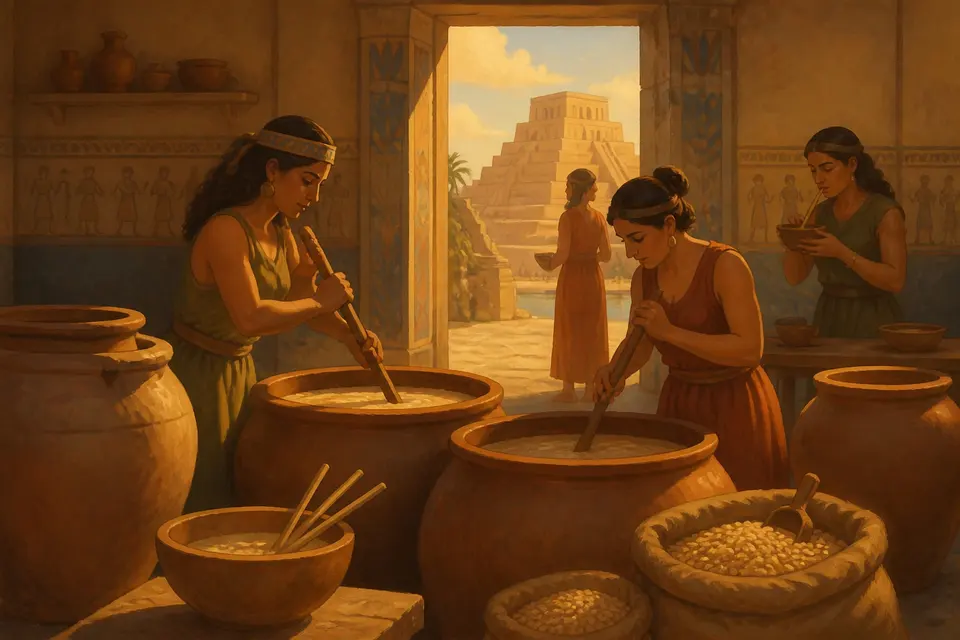
They mention a bread made from barley, called bappir, baked twice, which is crumbled into water. They mention malt, made from sprouted barley, mixed with honey and dates, in a big vat. The mash is left to ferment and is then spread on reed mats to cool. The liquid is strained and runs from the vat into a collecting jar “with a pleasant sound,” which the hymn compares to the rushing of the Tigris and Euphrates.
Scholars have debated how much of the hymn reflects an actual recipe, as the poem is vague about quantities and timing. But it gives a good outline of the steps, and it is the oldest known description of brewing in the world.
How it was drunk
Sumerian beer was thick, cloudy and low in alcohol, more like a porridge than a pint. It was drunk through straws, long reeds or tubes of gold or lapis for the wealthy, to avoid the husks and sediment floating on top. Seals from the period show people sitting around a large jar, each with a straw. It was a social event.
Beer was also a form of wages. Administrative tablets from the Sumerian city of Ur, around 2100 BCE, record daily rations of beer for workers, usually together with bread and onions. A laborer might receive a couple of liters a day. The beer was, in effect, part of the paycheck.
The tavern keeper
Women were prominent in brewing, and in the taverns. The tavern keeper, in Akkadian sābītum, appears in several legal texts. In the Code of Hammurabi, written around 1754 BCE, there are laws about tavern keepers, who were usually women. One law said that if a tavern keeper charged more for beer than for grain, she should be thrown into the water. In another, if she allowed criminals to meet in her tavern and did not report them, she would be put to death. Taverns were clearly important, and watched.
In the Epic of Gilgamesh, the hero meets Siduri, a divine tavern keeper who lives at the end of the world and gives him the advice to enjoy his life.
A chicken-and-egg question
Some archaeologists have proposed that beer may have been one of the reasons people began to farm. That is, the earliest cultivation of barley and wheat may have been driven partly by a taste for fermented drinks, not only for bread. The “beer before bread” hypothesis is debated, and the evidence is not decisive. But it is an appealing idea, and it shows how deeply beer was embedded in early civilization.
The goddess today
The name Ninkasi has been revived many times. Besides Anchor’s 1989 beer, there is a craft brewery in Eugene, Oregon, founded in 2006, named after her. Homebrewers regularly try to recreate Sumerian beer, using ancient grains and baking bappir bread in clay ovens, and they report that it tastes sour, slightly sweet, and rather like a thin, hazy, low-alcohol cider.
It is difficult to know what the beer of 1800 BCE really tasted like. But it is hard not to be moved by the picture of a priestess singing a hymn while stirring a vat. It was a song, a prayer and a recipe, all at once. And for four thousand years, it has been waiting for someone to make a drink out of it.