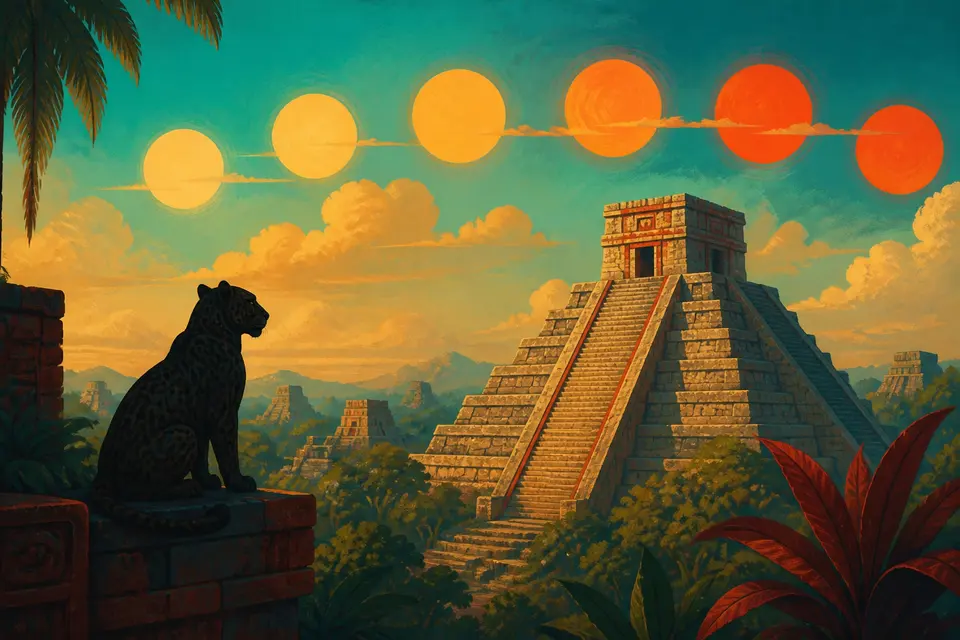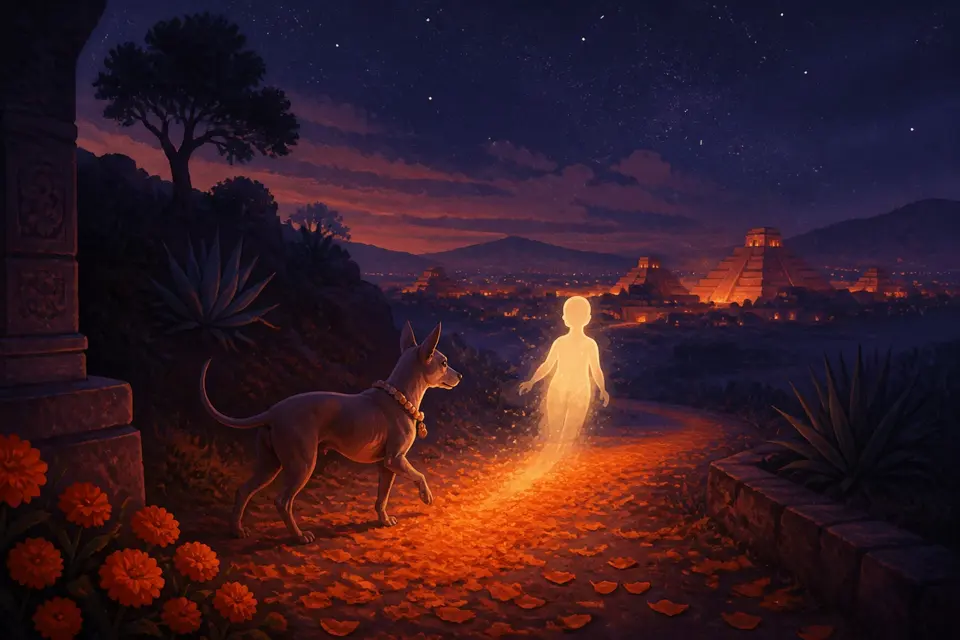
In the 2017 animated film Coco, a stray, scruffy, hairless dog named Dante follows a boy named Miguel into the land of the dead and, at the end, turns out to be the one who guides him home. Audiences around the world fell in love with the dog. Fewer people noticed that Dante is a real breed, with a real history of about 3,000 years, and a real connection to a god of the Aztecs. His name is the Xoloitzcuintli, “the dog of Xolotl,” usually shortened to Xolo.
A god with a dog’s head
Xolotl was an Aztec god, usually shown with the head of a dog. He was the twin or companion of Quetzalcoatl, the feathered serpent, and he was associated with lightning, fire, twins, monsters, and above all with the journey of the dead. According to one myth, when the gods created the Fifth Sun, they all had to sacrifice themselves to set it in motion. Xolotl, who did not want to die, ran away, transformed himself into a maize plant with two stalks, a field of agaves and finally an axolotl, the strange salamander that lives in the lakes around Mexico City. The word axolotl means something like “water-Xolotl.” Eventually, he was caught and killed, and the sun began to move.
In another myth, Xolotl accompanied Quetzalcoatl to the underworld, Mictlān, to retrieve the bones of the earlier humans, from which the people of the present age were made. He was the one who carried the bones out.
The dog and the dead
The Aztecs believed that a soul had to travel through the nine levels of Mictlān to find rest, and that the trip took four years. One of the first obstacles was a wide river, the Apanohuaya. According to belief, the soul could cross only with the help of a dog, which carried the dead person on its back. That is why dogs were sacrificed and buried with their owners.
There was even a custom about the color. A white dog could not do it, because it would say it had just been washed and did not want to get dirty. A black dog was also unsuitable, because it would say it had already dyed itself. The right dog was a yellow or brownish dog. A story with a gentle sense of humor, that rewards a particular kind of animal.
The breed
The dogs buried with the dead were probably the ancestors of the modern Xoloitzcuintli. It is one of the oldest dog breeds in the Americas. Hairless dogs appear in pottery from western Mexico about 2,000 years ago, notably the fat, comical ceramic dog figures of the Colima culture, which are found in tombs. Their skeletons have been discovered at Aztec sites, along with remains that suggest they were eaten as well as revered.
A hairless dog has few teeth, a warm body, and skin that feels hot to the touch. Folk belief held that the dogs could ease pain, and people kept them on their beds to treat arthritis and stomach aches. Whether or not that works, the idea of a hot-water bottle with a face is lovely.
Almost lost
After the Spanish conquest, the Xolo nearly disappeared. The Spanish dismissed it as a pagan animal, and the dog was displaced by European breeds. By the 1950s the Xolo was so rare that a group of Mexican enthusiasts went out into remote villages to find remaining specimens and began a breeding program. The Xolo is now recognized by kennel clubs around the world, and it is a symbol of Mexican identity. The painters Diego Rivera and Frida Kahlo kept them, and it appears in some of their works.
Coco and the real tradition
Coco gave the idea a global audience, and in it Dante’s role as a guide of souls is the same as in the old myth. The film’s colorful spirit animals, the alebrijes, are a folk-art tradition created in Mexico City in the 1930s by the artisan Pedro Linares and later embraced by Oaxacan carvers. The design of the land of the dead is not Aztec, but based on the modern Day of the Dead tradition. Yet the heart of the movie, that a dog accompanies a living person into the world of the dead and leads them back, is deeply Mesoamerican.
A very old idea
Dogs as guides of the dead appear in many cultures: Anubis, Cerberus and the dogs that watch over the bridge of the Zoroastrian afterlife, among others. It makes some sense that the animal that has been our companion for tens of thousands of years should be seen as someone who can be trusted to find the way in the dark.
If you have ever watched a dog wait by a door, you may understand why.