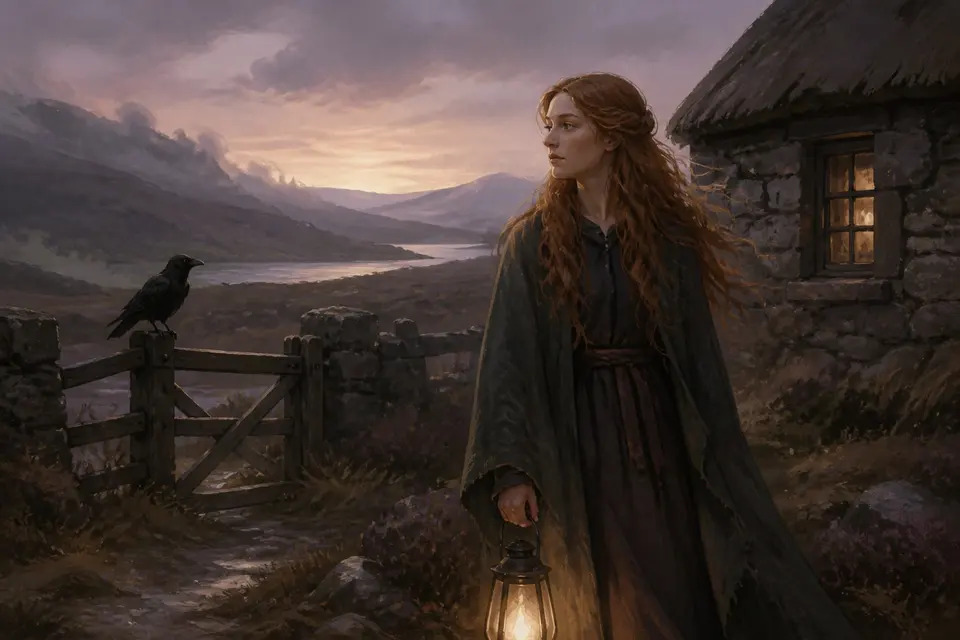
Irish literature has a story, “The Adventure of Nera,” in which a man named Nera is sitting in the king’s hall on the night of Samhain. The king has set a challenge: tie a twig around the ankle of one of the two hanged men outside. Nobody wants to go, because on this night, the Otherworld is awake. Nera goes. The corpse speaks to him and asks for a drink. He carries it on his back to a house where it takes a sip, spits it out and drops dead again. When Nera returns to the hall, he finds the fortress burned and the people dead. Then he realizes that it was a vision. This is the sort of thing that happens at Samhain.
The festival
Samhain, pronounced roughly “SOW-in,” was one of the four major festivals of the old Irish year, along with Imbolc at the beginning of February, Beltane at the beginning of May and Lughnasadh in August. It marked the end of the summer and of the harvest and the start of the dark half of the year. The word probably comes from Old Irish samain, which is related to sam, “summer,” and fuin, “end,” though scholars debate it. It is still the word for November in modern Irish: Samhain.
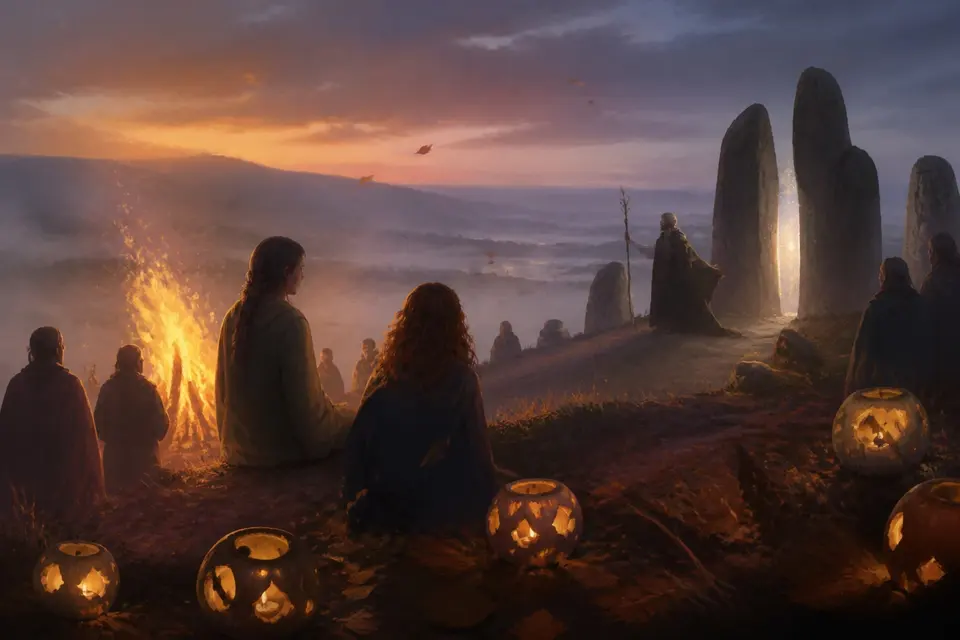
We know about it mainly from medieval Irish texts of the ninth to twelfth centuries, which describe it as a time of gatherings and fairs, where people paid debts and made deals. Cattle were brought down from the summer pastures. Some were slaughtered for winter food, and bonfires were lit. Seventeenth-century historian Geoffrey Keating describes a fire at Tlachtga, a hill in County Meath, where a great gathering was held. It is not certain how far back the tradition goes.
The thin place in time
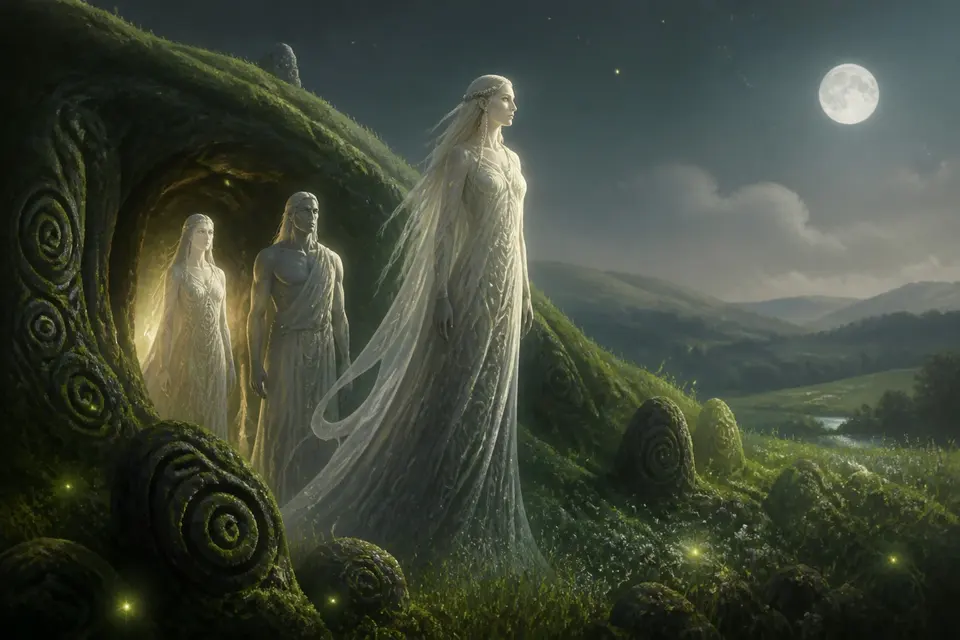
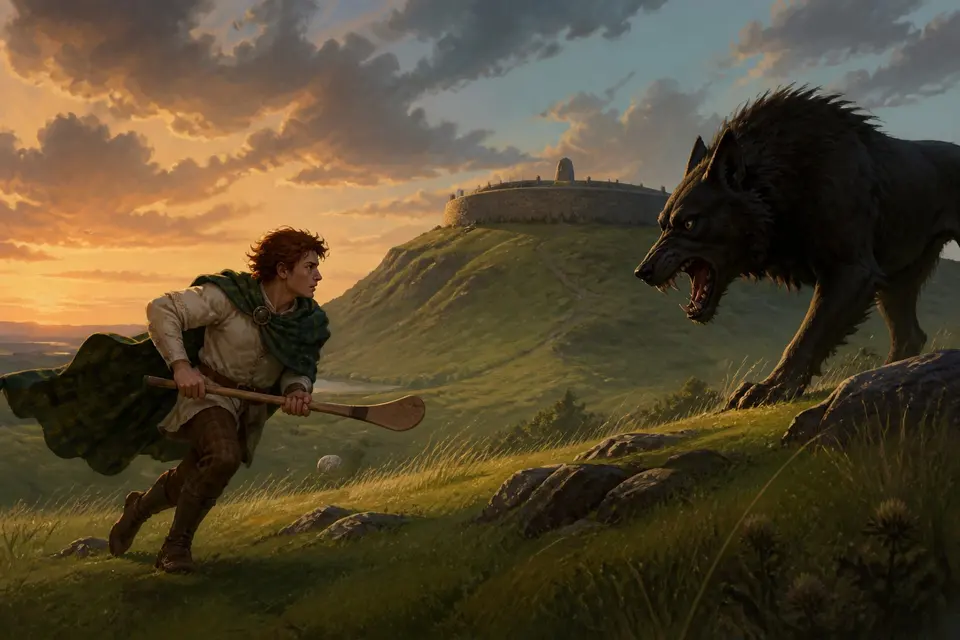
Why was it so special? In the Irish stories, Samhain is a threshold. It is neither summer nor winter, neither one year nor the next. On such a day, the barrier between this world and the Otherworld grows thin, and the beings who live in the hills, the aos sí, can come out. Many of the most important events in Irish myth are set on that night. The second Battle of Mag Tuired, the great fight between the Tuatha Dé Danann and the Fomorians, takes place at Samhain. The hero Cú Chulainn is struck down by two fairy women at Samhain and spends a year in a sickness that only the Otherworld can cure. Fionn mac Cumhaill kills a fairy musician, Aillen, who came every Samhain to burn the royal hall of Tara.
The practical advice that comes out of it is familiar. Be careful on the roads. Leave food for the visitors. Do not go out after dark if you can help it. In some places, people laid a place at the table for the dead.
From Samhain to Halloween
The name Halloween comes from “All Hallows’ Eve”: the evening before All Hallows’ Day, or All Saints’ Day, on November 1. The Christian feast was set on that date in the eighth and ninth centuries. Some historians argue that the Church picked the day to absorb the Celtic festival. Others say the connection is less clear and that the Christian date has its own roots. Most agree that, in Ireland and Scotland, the two traditions merged.
Many modern Halloween customs have Irish and Scottish roots. Children went “guising,” going from house to house in costume and getting nuts and apples in exchange for songs or poems. The costumes may have been intended to disguise people from the spirits, or may have developed from folk plays. Games with apples and nuts, which were used to tell fortunes, were popular. A ring baked into a loaf of bread, barmbrack, was said to predict marriage.
Jack and his lantern
The best-known symbol is the glowing face in a carved vegetable. In Ireland and Britain, people carved turnips and mangel-wurzels, large beets, and put a candle or a coal inside. The story that goes with it is the legend of “Stingy Jack,” a drunk and a trickster who tricked the devil into climbing a tree, carved a cross in the trunk to trap him and made him promise never to take his soul. When Jack died, heaven refused him because he had been a sinner and hell refused him because of the deal. The devil threw him a burning coal from hell, and Jack put it in a hollowed turnip and has wandered with it ever since. They called him Jack of the lantern.
When Irish immigrants went to North America in large numbers in the nineteenth century, especially during and after the Great Famine, they took the custom with them. They found that pumpkins were bigger, easier to carve and much more common. The pumpkin took over.
What survives
Today, some modern pagans celebrate Samhain, often as the new year. In Ireland, there are fire festivals, parades and a big event in Derry, billed as the largest Halloween celebration in the world. But the old idea behind the festival survives in a diluted form in every child’s costume and every plastic ghost: that on this night, the borders thin, and people put on strange faces to meet whatever comes.
It is a good reminder that holidays are rarely invented from scratch. They are built from older stories, which in turn are built from older ones, like layers of a very old house.